After a decade of designing surveillance systems for warehouses, retail chains, and corporate campuses, I have learned one hard truth: a beautiful camera placement diagram is useless if the client cannot open it in their own tools. That is where the humble DXF file, short for drawing exchange format, becomes the unsung hero of our industry. When you need to hand off a design to an architect who lives in AutoCAD or to a security integrator who works from a site plan, the quality of your dxf export security plans determines whether you look like a pro or a rookie.
I remember a project early in my career where I spent three days perfecting a surveillance layout in a proprietary tool. The client asked for a DXF so their electrical contractor could overlay conduit runs. The export came out a mess: layers were merged, scaling was off, and the blueprint they printed was unusable. That was the day I stopped treating exports as an afterthought. Since then, I have built workflows around export accuracy, and I have seen how a clean DXF can save hours of rework and preserve trust with clients.
What Makes DXF the Right Format for Security Plans
DXF is not the flashiest format. It does not render 3D walkthroughs or simulate motion detection. But for real-world construction and integration work, it is the standard. CAD software like AutoCAD uses DXF natively, and most architects, electricians, and low-voltage contractors expect files they can open and modify without conversion headaches. Vector graphics inside a DXF remain crisp at any scale, which matters when you are zooming into a floor plan to check camera overlap or intrusion detection zones.
When you export security plans as DXF, you are giving the recipient a file that behaves like a native drawing. They can snap lines, measure distances, and layer in their own data: access control points, door contacts, even lighting fixtures. That compatibility is the difference between a design that gets built and a design that gets ignored.
Layer Management: The Make-or-Break Detail
One of the biggest mistakes I see in exported DXF files is poor layer management. A good CCTV design might include camera icons, coverage cones, cable routes, power drops, and mounting heights. If every element dumps into a single layer, the electrician cannot turn off the camera labels to see the conduit path. The integrator cannot hide the coverage cones to check field of view against obstacles. Your dxf export security plans should respect the same layer structure you used in your design tool.
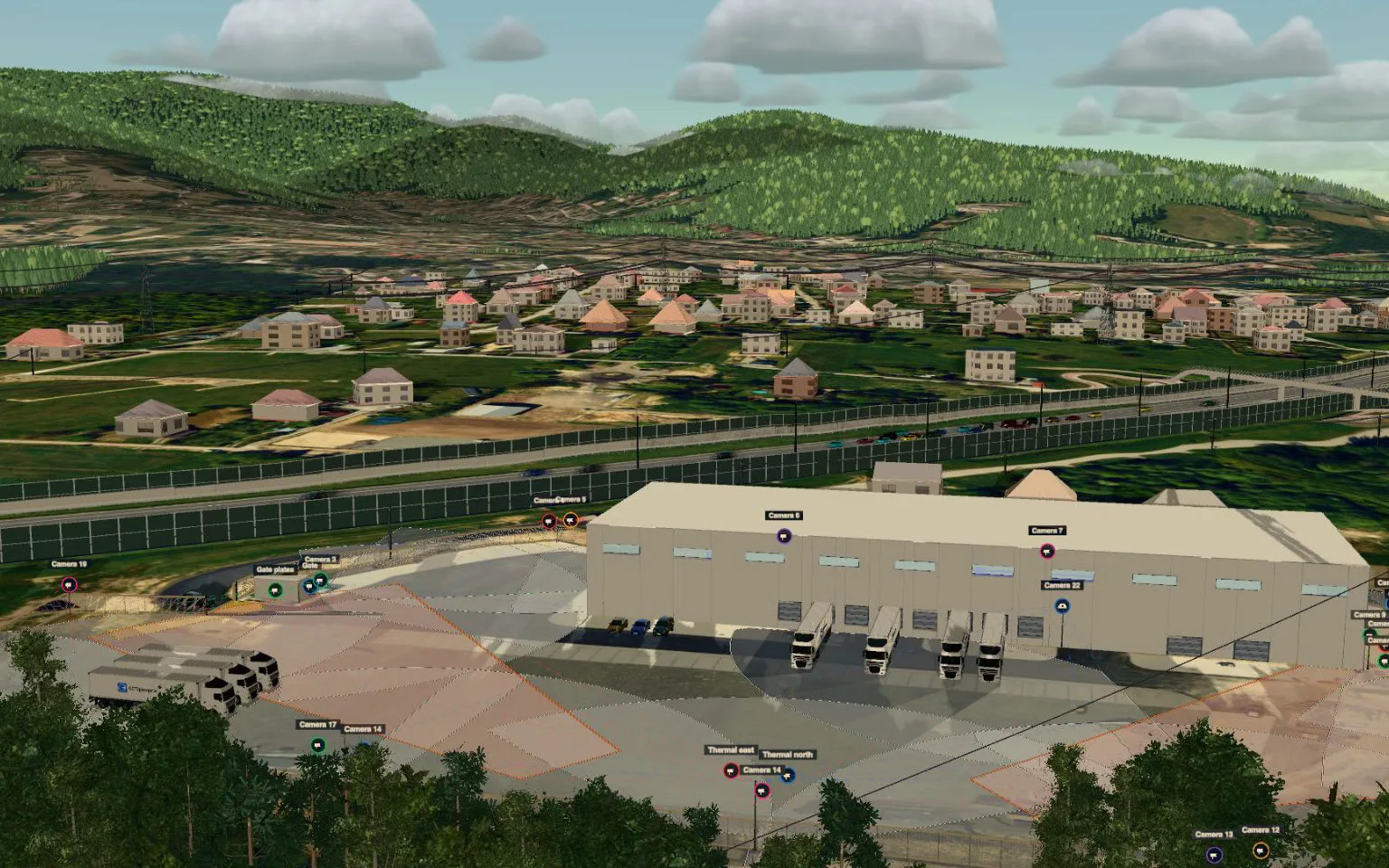
In practice, this means naming layers clearly: something like "cameras-icons", "coverage-cones", "cable-routes", "labels". Some software lets you assign line colors and line types per layer, so a dashed line for wireless links and a solid line for cat6 runs. Do not assume the recipient will clean it up. They will not. They will call you and ask for a re-export, or worse, they will redraw everything from scratch.
Scaling and Coordinate Accuracy
Another pitfall is scaling. I have received DXF files from subcontractors where one inch in the drawing equals ten feet in the real world, but the file metadata says something else. When you import that into a site plan, the cameras end up in the parking lot instead of the lobby. Export accuracy starts with setting the correct units at the design stage. If your floor plan was drawn in millimeters, stick to millimeters in the DXF. If the original blueprint used feet, match that.
I always test an export by opening it in a free DXF viewer or, better yet, in AutoCAD if I have access. I check a few known distances: a door width, a corridor length, the distance between two camera positions. If those match the source design, the scaling is right. If they do not, I go back and fix the export settings before sending it to the client.
When to Use DXF vs. Other Formats
Not every situation calls for a DXF. If you are sending a quick visual to a client who just wants to see coverage, a PDF or a rendered image works fine. But for technical handoffs, DXF is often the best choice. Here is a quick guide based on what I have learned:
- Use DXF when the recipient needs to edit the drawing or overlay their own data.
- Use DXF when the design will go into a construction set or permit application.
- Use DXF when you need precise scaling for cable lengths or mounting positions.
- Use PDF for approvals and presentations where the layout is final.
- Use a proprietary format only if both sides use the same software chain.
The key is knowing your audience. An architect who works in Revit might prefer a DWG, but DXF is a safe universal fallback. For security system design, I find that DXF strikes the right balance between compatibility and fidelity.
Practical Workflow for Reliable Exports
Over the years, I have developed a routine that keeps export errors low. Before I export, I clean up the design: remove temporary guidelines, group related objects, and check that every camera symbol is on the correct layer. I also purge unused blocks and layers from the source file. A cluttered source produces a cluttered DXF.
When I run the export, I pay attention to the options. Some tools let you choose the DXF version. I usually pick the oldest version that still supports modern features, because older versions of AutoCAD can open it without issues. I also disable any raster image embedding unless it is absolutely necessary. Vector graphics only. That keeps the file size small and the performance snappy.
After export, I do a quick sanity check. I open the DXF in a separate viewer and look for missing elements, misaligned geometry, or garbled text. Text is a common casualty: special characters or non-standard fonts can turn into question marks. I stick to standard fonts like Arial or CAD-standard SHX fonts to avoid that.
Integration with Access Control and Intrusion Detection
A modern security system does not stop at CCTV. Access control panels, intrusion detection sensors, intercoms, and alarm keypads all need positions on the same floor plan. When you design in a tool that supports layering, you can export all these systems together in one DXF file. The security integrator then sees how the camera placement relates to door contacts and motion detectors, which helps them avoid conflicts.
I have seen designs where a camera was placed perfectly for coverage, but the access control reader was mounted on the same wall and the cable paths interfered. A combined DXF export makes those conflicts visible early. The integrator can shift the reader a few feet, and the camera still covers the door. That is the kind of coordination that prevents costly change orders.
Common Questions I Get About DXF Exports
People often ask me whether they need expensive CAD software to open a DXF. The answer is no. Free viewers like LibreCAD or online DXF viewers work fine for checking layouts. But if the recipient needs to edit, they will likely use AutoCAD or a similar program. Another question is about line weights. DXF does not always preserve line weight the way a print-ready PDF does. I usually set line weights in the source design and verify them in the export. If the export loses them, I add a note for the recipient.
Some designers worry about losing metadata like camera model numbers or IP addresses. DXF supports attributes in blocks, but it is not a database format. I treat the DXF as a geometry and layout reference, and I provide a separate spreadsheet for device details. That keeps the drawing clean and the data accurate.

Final Thoughts on DXF Export Security Plans
In the end, dxf export security plans are a bridge between design intent and construction reality. They let you speak the same language as the people who will pull cables, mount cameras, and configure panels. When done right, they save time, reduce errors, and build credibility with clients who know the difference between a polished export and a sloppy one.
The tools we use for CCTV design keep getting better, but the fundamentals of clear communication have not changed. A well-structured DXF file that respects layer management, scaling, and compatibility will always be worth more than a flashy render that cannot be opened on a job site. That is why I still spend time dialing in my export settings, even after all these years. The payoff is trust, and trust is what keeps clients coming back.